The Complete Guide to Finding a Reliable OEM/ODM Cosmetics Manufacturer
When you are pursuing the dream of launching your own beauty brand but feel lost at the step of finding a manufacturer, know that you are not alone. Every successful brand has stood at this crossroads. Choosing the right OEM/ODM cosmetics manufacturing partner is not just about production; it is foundational to your brand’s DNA, its market competitiveness, and long-term stability. This article provides a complete roadmap for finding and vetting a reliable cosmetics manufacturer from scratch.
Step 1: Define Your Needs – OEM, ODM, or Private Label?
Before you begin your search, clarify which collaboration model you require:
OEM (Original Equipment Manufacturing): You possess a mature product concept, formula, and potentially design; the manufacturer primarily provides production services. This requires you to have strong product development knowledge.
ODM (Original Design Manufacturing): The manufacturer provides a complete package from market research, concept development, formula R&D, to production; your primary role is in decision-making and branding. This significantly lowers the R&D barrier for startup brands.
Private Label: This typically involves selecting a product from the manufacturer’s existing library of mature formulas, with customization focused mainly on packaging. It is the fastest and most cost-effective launch method.
For most startup brands, partnering with a manufacturer that can flexibly provide ODM services while supporting a future transition towards OEM is a smart choice for balancing vision with practicality.
Step 2: Systematic Search Channels – Analysis of Four Key Pathways
You can systematically identify potential partners through the following channels, each with distinct advantages and considerations:
Step 3: Key Screening & Evaluation – A Four-Step Vetting Process
Search Channel
Core Advantages
Considerations & Challenges
Industry Trade Shows
Enables face-to-face meetings with factories for direct assessment of their scale, product samples, and professionalism; excellent for learning about industry trends.
Requires investment of time and travel costs; staff at exhibition booths may not be the core technical team.
Industry Directories & Associations
Entities are often pre-vetted, offering relatively higher reliability; allows for quick understanding of regional industry clusters.
Information may not be fully up-to-date; may not completely reflect a factory's actual service capabilities.
Supply Chain Referrals
Based on practical experience, offering high trust and saving significant screening time.
May be limited to the referrer's specific network; a solution that worked for them may not perfectly fit your needs.
Once you have a list of candidates, follow these steps for in-depth screening:
Official Certifications: This is the baseline. A reliable OEM/ODM cosmetics manufacturer must possess at least GMPC (Good Manufacturing Practice for Cosmetics) and ISO 22716 certifications. For target markets like Europe or North America, FDA registration and support with relevant compliance documents (e.g., CPSR) are crucial.
Factory Tours & Equipment: Request a real-time factory walkthrough video or an online tour. Pay close attention to workshop cleanliness, the level of production line automation, and laboratory facilities.
2. Deep-Dive into Capabilities: R&D & Innovation Strength
R&D Team: Understand the background and expertise of their R&D personnel. A strong, dedicated in-house R&D team is the core of genuine ODM capability.
Formula Library & Case Studies: Inquire if they have successful cases serving markets or brand positions similar to your target. A factory with a library of thousands of mature formulas can respond to your needs more swiftly.
Ingredient Supply Chain: Learn about their cooperative ingredient suppliers (e.g., international leaders like BASF, Symrise). This directly impacts the stability, safety, and quality consistency of the final product.
3. Communication Assessment: Service Mindset & Professionalism
Responsiveness & Question Depth: During initial communications, note their response speed and the professional depth of their questions. An excellent manufacturer will inquire in detail about your brand philosophy, target audience, market positioning, and efficacy requirements, not just focus on price and Minimum Order Quantity (MOQ).
Problem-Solving Orientation: Are they willing to discuss the feasibility of your product ideas and offer constructive, professional suggestions? This helps distinguish a mere “order taker” from a true “problem-solving partner.”
4. Ultimate Verification: Sampling & Compliance
Sampling Process: Request a custom sample based on your specific requirements. This is the ultimate test of their technical comprehension, execution capability, and integrity.
Test Reports: Require relevant test reports for the samples, such as stability testing and microbial challenge testing. Confirm that they can provide the complete set of compliance documents required for your target market.
Step 4: Addressing Core Concerns of Startup Brands
Regarding your specific needs, here is some practical advice:
Regarding Flexible MOQ: MOQ is determined by packaging customization costs, raw material procurement minimums, and production line setup costs. You can significantly lower the initial barrier by opting for the manufacturer’s existing standard packaging or accepting a “shared packaging” model. Ask directly: “For a startup brand like ours looking to test the market with small batches, do you offer flexible supply chain solutions?”
Regarding Product Development Assistance: When communicating with an ODM cosmetics supplier, describe your user persona, usage scenarios, and desired product experience as clearly as possible. Provide market samples you like (or dislike) as tangible references. A competent ODM partner will expertly guide you through the entire journey from concept to a finalized, producible formula.
Regarding Understanding Western Markets: This goes far beyond simply “good quality.” During inquiries, you can ask specific questions such as:
“Do you have experience formulating sunscreen products that comply with EU or US FDA regulations?”
“How does your formulation approach differ when developing foundations for dry versus oily skin types?”
“How can sustainability be reflected in the packaging?”
Action Checklist: 10 Essential Questions to Ask When Contacting a Manufacturer
Prepare this list for your in-depth discussions with prospective manufacturers:
Can you detail the complete development process and timeline from initial concept to finished product delivery?
How does your R&D team ensure the safety and efficacy stability of new formulas? What specific testing protocols are in place?
What international certifications and qualifications do you hold? Can you actively support product compliance registration for our target market?
Based on our initial concept, would you recommend an ODM or OEM approach for us, and why?
How is your Minimum Order Quantity (MOQ) calculated? Are there flexible solutions to lower the MOQ for startup brands?
What is the process, associated cost, and typical timeline for sampling? How many sampling rounds are usually needed to finalize a product?
What is the standard range for production scheduling and delivery lead times? How do you handle urgent or rush orders?
Beyond core production, what value-added services can you provide (e.g., market trend insights, packaging design support)?
Could you share 1-2 case studies of brands you’ve served with a positioning similar to ours?
In a long-term partnership, how will we maintain ongoing communication and work together to optimize product quality and the supply chain?
Conclusion
The process of finding an OEM/ODM manufacturer is, in essence, choosing a “co-founder” for your future brand. This partner needs not only robust technical and production capabilities but also the sincerity to understand your brand vision, the agility to adapt to market changes, and a genuine spirit of partnership for shared growth. Guangzhou Qiaomei Cosmetics Co., Ltd. is precisely the reliable partner you are searching for. About Certification and Compliance Strength
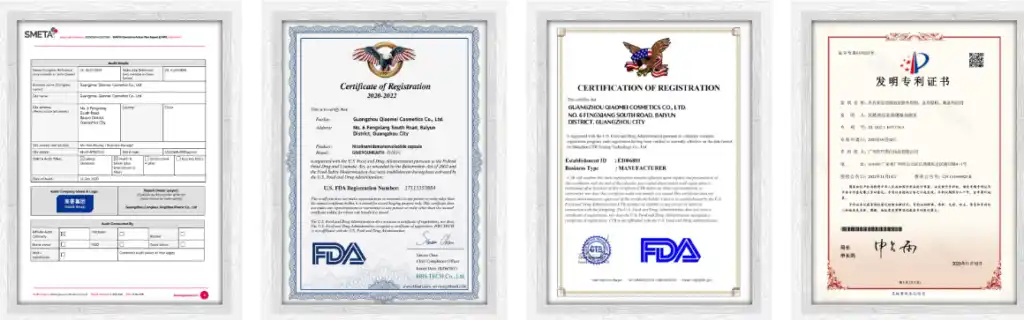
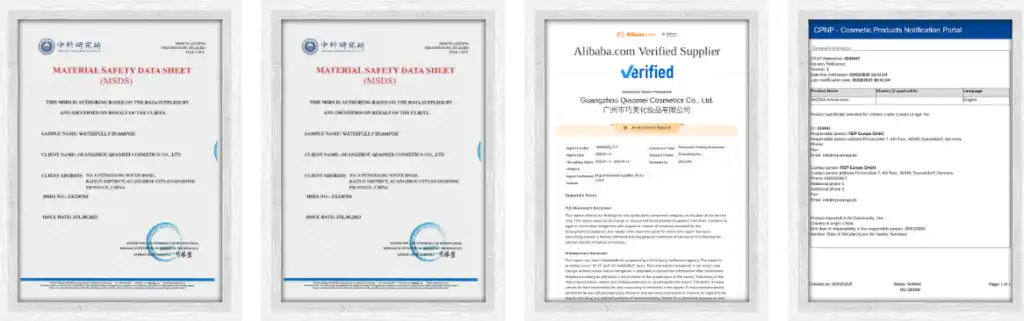
Qiaomei not only meets basic requirements but has established a compliance system that exceeds standards. Our production system strictly adheres to ISO 22716 and GMPC standards and has obtained FDA registration, HALAL certification, and audits from multiple international authorities (e.g., SGS, TÜV). More importantly, we have an independent regulatory affairs department that provides clients with full-process compliance support—from formula safety assessment and CPSR reports to specific market registrations (e.g., EU CPNP)—ensuring your products move seamlessly in global markets.
About R&D and Product Development Strength
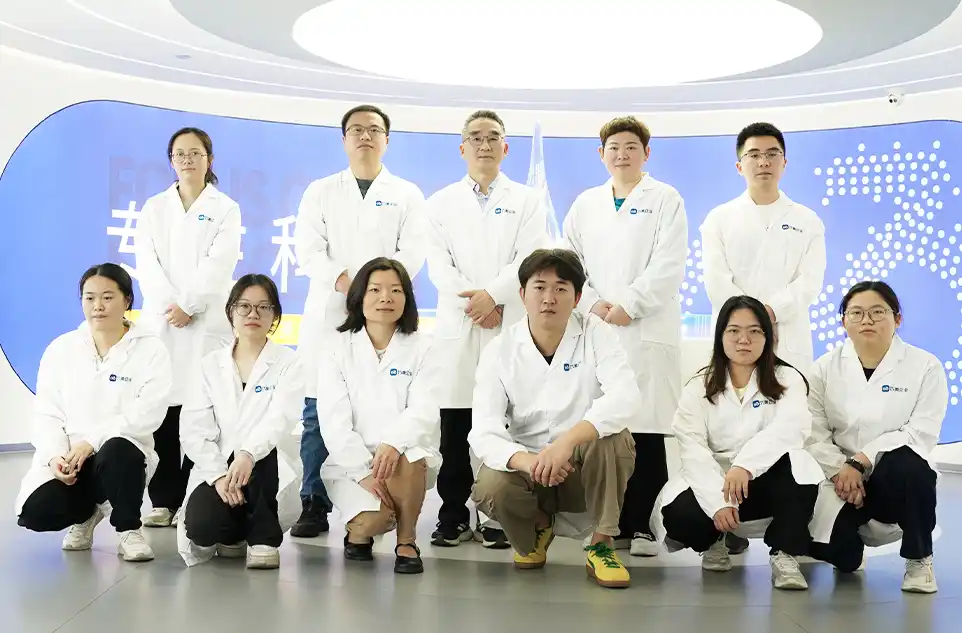
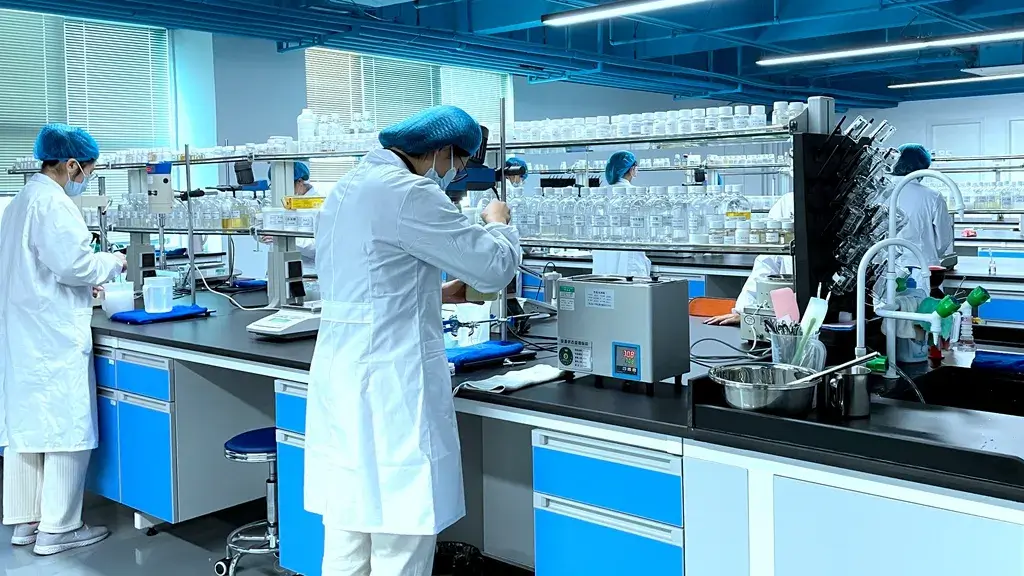
This is the cornerstone of Qiaomei. We have a team of over 30 professional R&D personnel and four specialized laboratories, forming a complete R&D chain from basic research to efficacy verification. Our accumulated library of over 10,000 mature formulas is not a static asset but is continuously iterated based on global market trends. When you present a concept, our R&D engineers can quickly reference this database and, combined with a deep understanding of ingredient mechanisms (e.g., how to precisely balance cleansing power and mildness through the blending of different surfactants), translate it into a stable, scalable, and market-differentiated high-performance formula.
About Production and Supply Chain Strength
We understand the significance of “flexible MOQ” for startup brands. Through two intelligent production bases, 16 automated production lines, and our self-developed MES production management system, Qiaomei truly achieves the integration of “scale” and “flexibility.” We can efficiently handle large-volume orders while also providing flexible order solutions for the brand launch phase—as low as several thousand bottles (e.g., shared packaging, batch delivery)—while guaranteeing the exact same quality standards as mass production.
About Quality and Control Strength
Quality is not the final checkpoint but the central nervous system that runs through the entire process.. We implement a three-tier quality monitoring system. Starting from the source, we conduct batch-by-batch testing on all imported raw materials and use facilities like our Microbial Challenge Laboratory to perform rigorous stability and safety tests on semi-finished and finished products. Every sample and every production batch you receive comes with complete COA (Certificate of Analysis), stability test reports, and compliance documentation, ensuring you have full transparency and confidence in product quality.
About Service and Partnership Value
We position ourselves as “Brand Co-creators.” From the first communication, our international service team and senior product managers delve into understanding your brand DNA and market goals, providing forward-looking advice encompassing market trend analysis, concept positioning, and cost optimization. We firmly believe that transparent communication and rapid response are the foundation of trust, and we are committed to transforming your inspiration into market-winning products through professional, end-to-end collaboration.
In summary, choosing Qiaomei means selecting a strategic-level partner with profound R&D heritage, solid production foundations, comprehensive compliance assurance, and a genuine commitment to fostering long-term brand growth through true partnership. We are prepared to provide the most reliable support for realizing your brand vision with our systematic, professional capabilities.
I’m QiaoMei, with over 25+ years of expertise in OEM, ODM and private label cosmetics, focusing on crafting high-quality HairCare Skincare BodyCare and makeup products with unparalleled insights into formulation, quality and market trends